
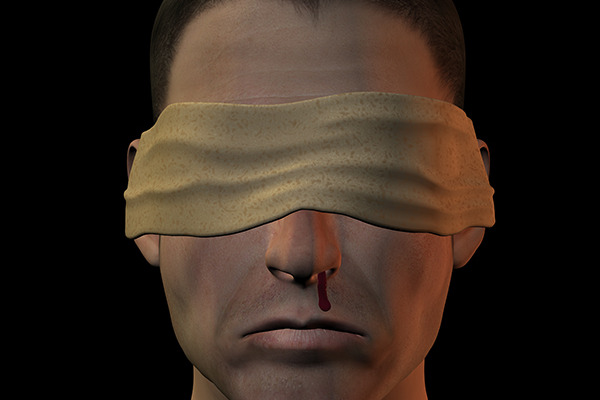
A new report by the Senate Select Committee on Intelligence on the CIA’s use of torture of suspected terrorists finds the agency repeatedly lied about brutal techniques that were both ineffective and illegal. The report also highlights examples of the extreme abuse, neglect, and torture of prisoners by CIA interrogators. As Time magazine notes,
Aspects of the detention and interrogation of al Qaeda suspects, according to the report, included: a detainee becoming unconscious during the simulated drowning technique known as waterboarding, requiring medical attention as he regurgitated air and water; a detainee dying from exposure to extreme cold shackled to the floor in what government observers later described as a dungeon; detainees’ injuries being allowed to deteriorate as part of interrogation; and psychological effects from interrogation including hallucinations, paranoia, self-harm and self-mutilation. The report also finds the CIA at times lost detainees and discovered them only after days of neglect.
Since the terrorist attacks on 9/11, Christians in Americans have mostly remained silent about the use of torture or assumed it was a legitimate and warranted tactic in the “war on terror.” A few Christians have given it serious thought, though, and continue to debate its use and morality. Many still disagree on whether torture is always wrong or whether there are certain extraordinary circumstances under which it is an exception to the rule that we cannot justify doing evil that good may come (cf. Romans 3:8).
My own personal view is similar to that of Southern Baptist ethicist Kenneth Magnuson, who has observed,
[E]ven if it is possible to defend torture theoretically, it is far from certain that it can be used justly in practice. Whether it could be contained to the few cases in which it may be justifiable; whether an adequate system of accountability could be set in place to prevent abuses; whether the interrogator is capable of extracting the information with the least coercion necessary (without turning quickly to torture because it is deemed to be justified); and whether it is possible to know for certain that the suspect indeed has relevant information; these are but a few concerns.
Based on this criteria, the report shows that the CIA’s program was not justifiable, did not include an adequate system of accountability to prevent abuses, and did not extract information with the least coercion necessary. For these reasons, the CIA’s actions were both immoral and violated the standards and laws recognized by the U.S. regarding the treatment of prisoners.
But this report should be the beginning, rather than the end, of the discussion on the morality and legality of torture. To aid in future discussions, I’d like to highlight seven things I believe all Christians should know about torture:
1. Torture is clearly defined — Despite the claims of many supporters of the CIA’s methods and techniques, torture is not a murky or ill-defined concept. The legal definition of torture to which the U.S. subscribes can be found in the UN Convention Against Torture:
For the purposes of this Convention, torture means any act by which severe pain or suffering, whether physical or mental, is intentionally inflicted on a person for such purposes as obtaining from him or a third person information or a confession, punishing him for an act he or a third person has committed or is suspected of having committed, or intimidating or coercing him or a third person, or for any reason based on discrimination of any kind, when such pain or suffering is inflicted by or at the instigation of or with the consent or acquiescence of a public official or other person acting in an official capacity. It does not include pain or suffering arising only from, inherent in or incidental to lawful sanctions.
By this standard the CIA has admitted that they have engaged in torture. (At the end of this article I’ve also included other definitions of torture adopted by the U.S.)
2. Many “enhanced interrogation techniques” fit the definition of torture — A list of enhanced interrogation techniques that the CIA has admitted to using are:
1. The Attention Grab: The interrogator forcefully grabs the shirt front of the prisoner and shakes him.
2. Attention Slap: An open-handed slap aimed at causing pain and triggering fear.
3. The Belly Slap: A hard open-handed slap to the stomach. The aim is to cause pain, but not internal injury. Doctors consulted advised against using a punch, which could cause lasting internal damage.
4. Long Time Standing: This technique is described as among the most effective. Prisoners are forced to stand, handcuffed and with their feet shackled to an eye bolt in the floor for more than 40 hours. Exhaustion and sleep deprivation are effective in yielding confessions.
5. The Cold Cell: The prisoner is left to stand naked in a cell kept near 50 degrees. Throughout the time in the cell the prisoner is doused with cold water.
6. Water Boarding: The prisoner is bound to an inclined board, feet raised and head slightly below the feet. Cellophane is wrapped over the prisoner’s face and water is poured over him. Unavoidably, the gag reflex kicks in and a terrifying fear of drowning.
The last three indisputably fit the definition of torture under all seven references.
3. Waterboarding is torture – Waterboarding has been used as a form of torture since the Middle Ages. Oxford scholar Cecil Roth writes in his book The Spanish Inquisition:
The water-torture was more ingenious, and more fiendish. The prisoner was fastened almost naked on a sort of trestle with sharp-edged rungs and kept in position with an iron band, his head lower than his feet, and his limbs bound to the side-pieces with agonizing tightness. The mouth was then forced open and a strip of linen inserted into the gullet. Through this, water was poured from a jar ( jarra ), obstructing the throat and nostrils and producing a state of semi-suffocation. The process was repeated time after time, as many as eight jarras being applied.
The U.S. military has also always considered waterboarding to be torture. During the U.S. Army Trials of Japanese War Criminals Conducted in Yokohama, Japan, Yukio Asano was charged with “Violation of the Laws and Customs of War: 1. Did willfully and unlawfully mistreat and torture PWs.” Among the specifications listed were “beating using hands, fists, club; kicking; water torture; burning using cigarettes; strapping on a stretcher head downward.” Asano was convicted of a war crime for waterboarding American prisoners.
Many critics claim that waterboarding of prisoners cannot be considered torture since the technique has been used in training in the U.S. Navy’s Survival, Evasion, Resistance, Escape (SERE) school. The waterboarding done in SERE, however, has been frequently criticized within the Department of Defense.
Also, as Malcolm Nance, counter-terrorism and terrorism intelligence consultant for the U.S. government’s Special Operations and a former Navy SERE school instructor, said in Small Wars Journal, there is a profound difference between waterboarding in training and what was done by the CIA:
The carnival-like he-said, she-said of the legality of Enhanced Interrogation Techniques has become a form of doublespeak worthy of Catch-22 . Having been subjected to them all, I know these techniques, if in fact they are actually being used, are not dangerous when applied in training for short periods. However, when performed with even moderate intensity over an extended time on an unsuspecting prisoner – it is torture, without doubt.
The CIA’s own Inspector General says that what his agency did and what is done in SERE training are completely different:
A footnote in the recently released 2004 CIA Office of Inspector General’s review of the government’s interrogation program appears to undermine a key legal justification that allowed the spy agency to use the controversial technique of waterboarding against suspected terrorist detainees.
A central legal—and polemic—argument for use of waterboarding has been the fact that some U.S. soldiers are subjected to the procedure during training. In 2002, the Department of Justice’s Office of Legal Counsel wrote a memo approving the technique, based in part on the fact that it had produced no long-term ill effects on soldiers who had undergone waterboarding during training. Those memos were later withdrawn by the DOJ.
But the latest review shows the waterboarding technique used on suspected terrorists was different in technique and duration from that administered to U.S. soldiers.
The OIG report says that experts’ initial analysis of waterboarding “was probably misrepresented at the time,” according to the CIA’s Office of Medical Services, because “the SERE [survival, evasion, resistance, and escape program] waterboard experience is so different from the subsequent agency usage as to make it almost irrelevant.”
As a consequence, the OIG found, “according to [the Office of Medical Services], there was no a priori reason to believe that applying the waterboard with the frequency and intensity with which it was used by the psychologist/interrogators was either efficacious or medically safe.”
4. The U.S. military opposes torture, including waterboarding — Waterboarding has always been defined as torture by American courts and military tribunals.
Sen. John McCain, who was tortured while a prisoner in Vietnam, has said waterboarding is torture and adds, ” People who have worn the uniform and had the experience know that this is a terrible and odious practice and should never be condoned in the U.S. We are a better nation than that. Charles Krulak, former commandant of the Marine Corps, and Joseph Hoar, former commander in chief of U.S. Central Command, say that waterboarding is torture and note that such methods “have nurtured the recuperative power of the enemy.” John Hutson, former Judge Advocate General of the Navy, says “Waterboarding was devised in the Spanish Inquisition. Next to the rack and thumbscrews, it’s the most iconic example of torture.”
As Phillip Carter notes, “If there really were tactical or operational reasons for us to continue waterboarding, you might expect the military to favor it.”
And yet the JAGs and the military oppose the technique in the strongest terms. They oppose it because they recognize it’s not particularly effective, and because they have to worry about our soldiers being subject to such treatment if captured. Most of all, they oppose it because they recognize the value of clarity for maintaining the discipline of America’s military. As one of us has written, “[T]here are few slopes more slippery than that from small war crimes to large ones. Any wartime action, no matter how heinous, can always be justified by some battlefield exigency.”
By claiming that waterboarding is not torture, we are saying that it is not a violation of the Geneva Convention. That means that our enemies are legally justified in using this “interrogation” technique on American service members. This fact was recognized by 29 former high-ranking military officers in a letter sent to Sen. John Warner about their opposition to the redefinition of the Geneva Convention statutes:
We have abided by this standard in our own conduct for a simple reason: the same standard serves to Protect American servicemen and women when they engage in conflicts covered by Common Article 3. Preserving the integrity of this standard has become increasingly important in recent years when our adversaries often are not nation-states. Congress acted in 1997 to further this goal by criminalizing Violations of Common Article 3 in the War Crimes Act, enabling us to hold accountable those who abuse our captured personnel, no matter the nature of the armed conflict.
If any agency of the U.S. government is excused from compliance with these standards, or if we seek to redefine what Common Article 3 requires, we should not imagine that our enemies will take notice of the Technical distinctions when they hold U.S. prisoners captive. If degradation, humiliation, physical and mental brutalization of prisoners is decriminalized or considered permissible under a restrictive interpretation of Common Article 3, we will forfeit all credible objections should such barbaric practices be inflicted upon American prisoners.
This is not just a theoretical concern. We have people deployed right now in theaters where Common Article 3 is the only source of legal protection should they be captured. If we allow that standard to be eroded, we put their safety at greater risk.
The counter to this is that Al Qaeda does not follow the Geneva Convention. While this is true, it is a shortsighted critique. As Sen. McCain says, “I doubt they will be the last enemy America will fight, and we should not undermine today our defense of international prohibitions against torture and inhumane treatment of prisoners of war that we will need to rely on in the future.”
5. Mental torture is as serious as physical torture — The claim that certain techniques cause only “mental” harm misunderstands the nature of torture. John McCain, a man who became intimately familiar with such treatment, explains the power of mental torture:
[T]here has been considerable press attention to a tactic called “waterboarding,” where a prisoner is restrained and blindfolded while an interrogator pours water on his face and into his mouth–causing the prisoner to believe he is being drowned. He isn’t, of course; there is no intention to injure him physically. But if you gave people who have suffered abuse as prisoners a choice between a beating and a mock execution, many, including me, would choose a beating. The effects of most beatings heal. The memory of an execution will haunt someone for a very long time and damage his or her psyche in ways that may never heal. In my view, to make someone believe that you are killing him by drowning is no different than holding a pistol to his head and firing a blank. I believe that it is torture, very exquisite torture.
6. Torture is an ineffective interrogation technique — While it makes no difference to the moral calculus, it is important to note that torture has never been proven to be effective.
In testimony presented to the Senate Judiciary committee, FBI interrogator Ali Soufan said:
The issue that I am here to discuss today – interrogation methods used to question terrorists – is not, and should not be, a partisan matter. We all share a commitment to using the best interrogation method possible that serves our national security interests and fits squarely within the framework of our nation’s principles.
From my experience – and I speak as someone who has personally interrogated many terrorists and elicited important actionable intelligence– I strongly believe that it is a mistake to use what has become known as the “enhanced interrogation techniques,” a position shared by many professional operatives, including the CIA officers who were present at the initial phases of the Abu Zubaydah interrogation.
These techniques, from an operational perspective, are ineffective, slow and unreliable, and as a result harmful to our efforts to defeat al Qaeda.
The recent report also notes that, based on the CIA’s own records,
The CIA’s use of its enhanced interrogation techniques was not an effective means of acquiring intelligence or gaining cooperation from detainees. . . While being subjected to the CIA’s enhanced interrogation techniques and afterwards, multiple CIA detainees fabricated information, resulting in faulty intelligence. Detainees provided fabricated information on critical intelligence issues, including the terrorist threats which the CIA identified as its highest priorities.
7. Torture harms the torturers too — The damage done by using such torture techniques is not only done to the prisoner. The New York Times notes how the torture disturbed some CIA personnel:
The torture of prisoners at times was so extreme that some C.I.A. personnel tried to put a halt to the techniques, but were told by senior agency officials to continue the interrogation sessions.
The Senate report quotes a series of August 2002 cables from a C.I.A. facility in Thailand, where the agency’s first prisoner was held. Within days of the Justice Department’s approval to begin waterboarding the prisoner, Abu Zubaydah, the sessions became so extreme that some C.I.A. officers were “to the point of tears and choking up,” and several said they would elect to be transferred out of the facility if the brutal interrogations continued.
Psychiatrist Jonathan Shay, author of Achilles In Vietnam: Combat Trauma and the Undoing of Character, found that dehumanizing the enemy during the Vietnam war caused psychological damage to American troops:
Restoring honor to the enemy is an essential step in recovery from combat PTSD (Post Traumatic Stress Disorder). While other things are obviously needed as well, the veteran’s self-respect never fully recovers so long as he is unable to see the enemy as worthy. In the words of one of our patients, a war against subhuman vermin “has no honor.” This in true even in victory; in defeat, the dishonoring makes life unendurable. (pg. 115)
In our attempts to dehumanize our enemy we end up becoming less than human ourselves. It would be a Pyrrhic victory to save civilization and lose our humanity
As political scientist Glenn Tinder once wrote, the human being is both fallen and exalted, sacred and yet morally degraded. These two aspects of humanity cannot be separated. A fact, Tinder admits, that is “hard for common sense to grasp.” Indeed, it is almost impossible to grasp when we try to apply this concept to our enemies. We often fall for one of two extremes.
The “liberal” (read: pacifist) position, for example, tends to be overly empathetic, refusing to use any force at all against an enemy since it can been seen as a failure to “humanize” our foes. But this is just one of the ways in which we can err. The “conservative” position, which seeks retribution and dehumanizes our opponents in order to distance them from ourselves, can be just as dangerous, particularly for those who must carry out this war.
We must never hesitate to defend our culture, our future, and our lives against those who seek to destroy us. The pacifist’s solution of laying down our arms in the face of such an enemy is suicidal. The conservative position, which is willing to face up to and address the evil of terrorism, provides a more adequate approach.
Yet the conservative position must never forget that the evil comes not just from the actions of “subhuman vermin” but from the heart of a fallen, sacred yet degraded, human being. If we are to preserve our own humanity we must not forget that our enemy differs from us in degree, not in kind.
Addendum: Legal Definitions of Torture
- Part 1, Article 1 and the US Reservations of the UN Convention Against Torture: The term “torture” means any act by which severe pain or suffering, whether physical or mental, is intentionally inflicted on a person for such purposes as obtaining from him or a third person information or a confession, punishing him for an act he or a third person has committed or is suspected of having committed, or intimidating or coercing him or a third person, or for any reason based on discrimination of any kind, when such pain or suffering is inflicted by or at the instigation of or with the consent or acquiescence of a public official or other person acting in an official capacity. It does not include pain or suffering arising only from, inherent in or incidental to lawful sanctions.
- The US Reservations for the UN Convention Against Torture: In order to constitute torture, an act must be specifically intended to inflict severe physical or mental pain or suffering and that mental pain or suffering refers to prolonged mental harm caused by or resulting from (1) the intentional infliction or threatened infliction of severe physical pain or suffering; (2) the administration or application, or threatened administration or application, of mind altering substances or other procedures calculated to disrupt profoundly the senses or the personality; (3) the threat of imminent death; or (4) the threat that another person will imminently be subjected to death, severe physical pain or suffering, or the administration or application of mind altering substances or other procedures calculated to disrupt profoundly the senses or personality.
- Article 32 of the Fourth Geneva Convention: any measure of such a character as to cause the physical suffering or extermination of protected persons in their hands . This prohibition applies not only to murder, torture, corporal punishments, mutilation and medical or scientific experiments not necessitated by the medical treatment of a protected person, but also to any other measures of brutality whether applied by civilian or military agents.
- Article 147 of the Fourth Geneva Convention: torture or inhuman treatment, including biological experiments, willfully causing great suffering or serious injury to body or health
- 18 United States Code Title 18, §2340(2) “torture” means an act committed by a person acting under the color of law specifically intended to inflict severe physical or mental pain or suffering (other than pain or suffering incidental to lawful sanctions) upon another person within his custody or physical control
(2)“severe mental pain or suffering” means the prolonged mental harm caused by or resulting from—
(A) the intentional infliction or threatened infliction of severe physical pain or suffering;
(B) the administration or application, or threatened administration or application, of mind-altering substances or other procedures calculated to disrupt profoundly the senses or the personality;
(C) the threat of imminent death; or
(D) the threat that another person will imminently be subjected to death, severe physical pain or suffering, or the administration or application of mind-altering substances or other procedures calculated to disrupt profoundly the senses or personality;



This is very shallow and lopsided. No doubt torture and loss of life are horrible realities of a fallen world, but this article only considers one side.
Would you consider laying out the opposing side here in the comments section?
Thank you for this.
It is a credit to your writing that I am not sure what side Rich thinks you are on.
“No doubt torture and loss of life are horrible realities of a fallen world…”
So are there consequences of the Fall that we shouldn’t speak out and/or work against? Which effects of sin (or Sin) are we allowed to turn a blind eye to and let remain?
Meanwhile the people the CIA performed these techniques on were plotting to kill THREE THOUSAND PEOPLE. Am I supposed to say we shouldn’t treat them terrible to get information out of them? And ISIS is beheading CHILDREN for simply not converting to Islam. We’re dealing with people who have absolutely no respect for human life. We’re dealing with people who WANT to be killed so that they can be martyrs. Of course the CIA will use techniques that make them panic and instill fear in them because then their brain will make them confess potentially key pieces of information simply because it’s a natural instinct to make it stop, regardless if you want to be a martyr. If they truly think they’ll be killed, many will confess. This is why the CIA uses these techniques. I feel absolutely no wrong is being done by waterboarding a terrorist who helped kill 3,000 people for no reason. He has no rights. He forfeited his rights to humane treatment when he shamelessly assisted the murder of 3,000 people for no reason. I don’t care if it’s considered torture. You need to torture some people to get information out of them. They did far worse to other people, and we DON’T EVEN KILL THEM! That would be the true justice, but we don’t ever do that! So what’s the harm in torturing them for information that saves lives?
Also, your article says the US military opposes torture. The CIA is not the military. In fact, the CIA isn’t even part of the government, it’s an independent organization. The CIA, like any secret organization or unit, sometimes also acts outside of international law. Sometimes this is necessary. So point 4 is completely void and meaningless.
“Meanwhile the people the CIA performed these techniques on were plotting to kill THREE THOUSAND PEOPLE.”
This is not completely true. Many of the individuals profiled in the report had nothing to do with 9/11. Including the one guy we killed.
“Am I supposed to say we shouldn’t treat them terrible to get information out of them?”
Legally speaking, yes. The U.S. is a signatory to the U.N. Convention on Torture. Reagan committed us. At the time, he wrote, “Ratification of the Convention by the United States will clearly express United States opposition to torture, an abhorrent practice unfortunately still prevalent in the world today.” If you disagree with that position, i.e. if you feel torture is now justified, then the U.S. should formally withdraw.
“because then their brain will make them confess potentially key pieces of information simply because it’s a natural instinct to make it stop”
Only this doesn’t appear to have happened, per the report. What information was obtained was typically false. Fabricated to make the torture stop. Additionally, we tortured many individuals had no information to give. Moreover, we tortured people who were apprehended based on a case of mistaken identity.
“He has no rights. He forfeited his rights to humane treatment when he shamelessly assisted the murder of 3,000 people for no reason.”
Then you disagree with the principles laid out in the U.S. Constitution w.r.t. criminal punishment and, as well, the U.S. Military Code. Humane treatment isn’t predicated on a criminal or combatant not having done anything especially bad.
“In fact, the CIA isn’t even part of the government, it’s an independent organization.”
This is demonstrably false. The CIA is independent in the sense that it’s not part of the military; that much is true. However, it’s funding comes from the federal government and it reports to the Director of National Intelligence, who reports to (and is appointed by) the President and confirmed by the Senate.
Not really sure what to think about this. Torture is clearly wrong, but why is this outlined as “7 Things Christians Should Know About Torture?” How about everyone else in the world? Religion kills, man.
And here I thought cutting the heads off Christian children and journalists was torturous…
I think the quote here that is applicable is a quote from one of the “Hangover” movie.. “but did you die?”
You guys do realize the rules of war do not apply here since these guys are not soldiers, right?
There is a time to put away childish things…and trying to treat these evil animals as human is childish.
“And here I thought cutting the heads off Christian children and journalists was torturous…”
Not necessarily. Barbarous and murderous sure, but not necessarily “torture” depending on how the beheading was performed.
“I think the quote here that is applicable is a quote from one of the “Hangover” movie.. “but did you die?””
“Resulting in death” isn’t a necessary criterion for something to constitute “torture”. I could yank all your teeth out without anesthesia and you wouldn’t die. I could burn out your eyeballs with hot pokers. I could crush the bones in your fingers and toes with a hammer, then amputate them, and you wouldn’t die. Hopefully we agree all those things would constitute “torture” despite their not resulting in your death.
“You guys do realize the rules of war do not apply here since these guys are not soldiers, right?”
The U.N. Convention on Torture, of which President Reagan made the U.S. a signatory, doesn’t only prohibit the torture of combatants. It prohibits all torture by a nation within its borders as well as the transport of individuals elsewhere to torture them there.
“There is a time to put away childish things…and trying to treat these evil animals as human is childish.”
Evil? Yes. But still abundantly human. Imago Dei. See Gen. 1:27.
Since when does torture not work? What about the enhanced interrogation techniques used on KSM? I think it’s pretty clear that saved countless American lives. Furthermore, much of this report (which btw, is NOT a Senate Report but a report put together by a bunch of DNC Staffers) is disputed by several former Obama and Bush Administration Officials. One, Michael Haden, says much of this “report” is a complete fabrication. Furthermore, he has said these techniques have, “…yielded a Home Depot sized trove of Intel.”
Please do your homework next time.
“What about the enhanced interrogation techniques used on KSM?”
KSM confessed, after being tortured, to planning a number of attacks. It’s not at all clear to me how this confession saved countless American lives. Can you elaborate?
“which btw, is NOT a Senate Report but a report put together by a bunch of DNC Staffers”
Not true. The report was issued by the Senate Intelligence Committee, though the Republican members dropped out early in the process. Staffers no doubt played a large part in its authorship, just like all research projects of this magnitude, but that doesn’t make it somehow “not a Senate Report”. The foreword begins with the sentence: “The full Committee Study, which totals more than 6700 pages, remains classified but is now an official Senate report.”
Well written article Joe. There is no moral authority for torture. Christians and most Americans do not morally accept it. The President claiming our higher moral authority, would have the military detention centers closed down and bring the captured enemy combatants to stand trial on US soil in our criminal justice system in order to protect their Human Rights. He abhors the use of “enhanced interrogation techniques” that were approved by the Bush Department of Justice as legal in an attempt to gain intelligence. At times our President even has acted unilaterally to release many “high level terrorists” from US military custody to go home. In deed, since his initial campaign, he has promised to end the war.
The only problem with that idealistic approach is that you can’t end a war by simply walking away where your enemy is the aggressor. He doesn’t care about human rights, and is even proud to demonstrate his skill in beheading innocent civilians. You can’t walk away….he won’t let you go… he wants to exterminate your way of life. He will even come to hunt you down where you live. So they war goes on and on.
Consider the death of Osama Bin Laden. Was he not in US Custody when he was captured in Pakistan? Why was his Human Rights protected by this same President? Surely the Navy Seals could have brought him to justice for 9-11. Did not The President give the order to execute Bin Laden without a trial? If one wants to claim “special status for Bin Laden, then consider that even today our Commander in Chief orders the increase of unmanned Drones to actually execute terrorists on their native soil, and readily accept the collateral death of innocents while doing so.
How many enemy combatants in US Custody actually died as a result of the “enhanced interrogation techniques”? Compare the number to those actually executed by these unmanned Drones. Are those deaths somehow morally acceptable because the acts were impersonal and distant compared to a more “personal” yet less fatal torture? I think not.
So, where is the Senate Report on all the actual deaths executed by US drones? Where is the moral outrage and outcry in the media and by the political left? Is not Life itself the most basic of Human Rights?
To quote General Sherman, “War is hell.” Christians do not morally accept war as a means to settle differences. But sometimes it is necessary in order to protect our Religious freedom and liberty, and make no mistake, this enemy wants to take away our religious freedom and liberty above all else. Ancient Israel’s enemies “differed from them in degree, not in kind” as well, yet God was with them in battle.
Torture or calloused execution? Both are repugnant, but so is playing politics with those who defend our freedom.
Great analysis, Joe. I’ve taught Michael Levin’s essay “The Case for Torture” at more than one Christian college, and each time I’ve been alarmed by how quickly (and thoughtlessly) students agree with him. Most worrisome is the fact that their agreement tends to be based on “letting the authorities do whatever it takes,” as if “authorities” are by definition infallible in judgment and incapable of being corrupted or damaged. (Whatever happened to rebellious youth?!)
My problem with this article is that it is misleading. As a Christian author writing for the purpose of bringing to light the way Christians should think about torture, you failed to speak about the gospel perspective surrounding this issue. Every thing said in the article is true, I have no problem with the content, however, everything said in this article would be said by anyone opposed to torture. There is not a hint of Christ here. As a Christian our loyalty is first to Christ not to the state. Our hearts and minds should reflect Christ not a political belief and yet your argument is just that, a political belief, albeit a well thought out and and well expressed one. Christians should be opposed to torture because it is the intentional harming of fellow human beings in need of the Gospel. Christians should be opposed to torture because it is sin, plain and simple, there is no justification or reason for it. Could we make the argument that the State has a duty to defend its citizens, maybe, but that is beside the point. The point is Christ, our first and greatest allegiance and everything we believe should flow out of that. Regardless of the “justification” Christians should never support the torturing of fellow human beings.
Its stunning that so many of the articles written by an organization that ostensibly focuses on public policy seemingly cannot clearly articulate public policy positions. This article seems to imply that torture is bad and doesn’t work. This ignores all evidence to the contrary. Many intelligence officials say it does work. We may never know to what extent it has been successful. As far as the moral side of the issue, there should be a clear line between personal morality and what governments can do in times of war. There certainly is in the Bible. Israel was commanded by God on more than a few occasions to utterly destroy civilizations and wipe them off the face of the planet, and yet they were also commanded not to murder. So clearly there is a moral difference between actions in war and personal morality. The list of enhanced techniques above are laughably humane when viewed in the context of a violent war that we are fighting against an people who would happily kill us all if they could.
Aditionally, there is no comparison to the actual torture that McCain or other POWs have endured and making a prisoner stand for a really long time. Its the difference between being supremely uncomfortable and feeling excruciating pain after being mutilated. Not even close.
John McCain himself seems to disagree with you. In his speech from the Senate floor he said:
“I have long believed some of these practices amounted to torture, as a reasonable person would define it, especially, but not only the practice of waterboarding, which is a mock execution and an exquisite form of torture. Its use was shameful and unnecessary; and, contrary to assertions made by some of its defenders and as the Committee’s report makes clear, it produced little useful intelligence to help us track down the perpetrators of 9/11 or prevent new attacks and atrocities.”
Full transcript here:
http://www.mccain.senate.gov/public/index.cfm/press-releases?ID=1a15e343-66b0-473f-b0c1-a58f984db996
Dear Mr. Carter,
First of all let me say that no where in your excellent piece does it menton that you are a Member of the Southern Baptist Convention’s Ethics and Religious Liberty Commission. Now, that being said…… you deserve a great deal of praise, since the organization as we all realize is such a conservative one. Secondly, the content of your piece is right on, and says what needs to be said; that torture is evil, and absolutely against everything that Jesus taught!
Oh, the Ph.D……. I got my doctorate in the field of psychology 47 years ago, and eventually became a Professor of Psychology and taught at the college level for 43 years my specialty being the psychology of religion (attempting to understand the mind of Christian fundamentalists!). Once again…….. a great piece!!!!!
Doug Sodertrom
[email protected]
I have two statements.
1. Terrorists have no rights under the Geneva Convention which is reserved for uniformed soldiers of signatory countries. We have no treaties regarding treatment of prisoners with terrorist organizations. UN treaties do not apply to ISIS or other terrorists because they do not belong to the UN. If they have no reciprocating responsibility in the treaty then they are not covered under the treaty.
2. Once you have killed my fellow-citizens, strap bombs to and/or otherwise hurt children, or take up arms against my countrymen in a terrorist campaign you have lost the independent claim on your life and comfort. If you as a terrorist don’t like what happens next that is on you. If you fit the above description should you automatically be put into enhanced interrogation? No, but if you are deemed to know information that could save American lives or degrade the terrorist organization that you work for we would be fools not to do everything in our power to elicit that information.
This whole thing is just not right when you have other countries that do not and will not do as the Geneva Convention says. These countries feel that they are above and beyond anything set forth by any country to protect any person or p.o.w. they behead people and kill people for no reason at all and now we are letting these countries tell us that we can’t do what we do to gain info to protect our country. I am not for killing people to gain info but at what point do we say hey stop what you are doing to our people. I do however feel that giving out this info in reports is undermining our countries integrity and security so I feel that these people that make up these reports are damning our country and they should be seen as internal terrorist and traders to our country.